
Complete pump-out
Remove accumulated fats, oils, grease, liquids, and settled solids under the approved service scope.
Explore serviceGrease trap and interceptor pumping, condition records, and recurring maintenance built around the actual equipment and operation.
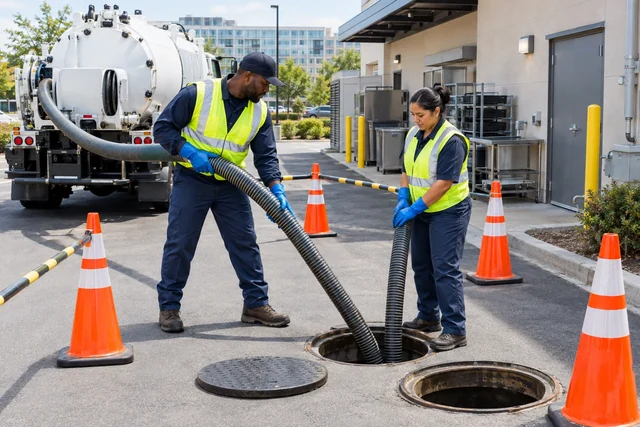
Confirm every unit, capacity, access point, service history, pumping interval, disposal route, and operating restriction. The maintenance plan includes inlet and outlet jetting twice each year for every grease trap in the plan, with safe access and suitable pipe conditions confirmed in the written scope.
Remove accumulated fats, oils, grease, liquids, and settled solids under the approved service scope.
Explore serviceInclude two scheduled jetting visits per year for the inlet and outlet of each grease trap in the maintenance plan. Identify pipe limits and access.
Explore serviceDocument service, accessible condition findings, receiving or disposal records, and repairs requiring separate approval.
Good intake helps separate the urgent symptom, the investigation, and the approved work.
Unit count, capacities, equipment type, access, hose reach, and operating hours
Pumping frequency plus two inlet/outlet jetting visits each year for every enrolled trap
Approved receiving facility, required service documentation, and authority-specific requirements
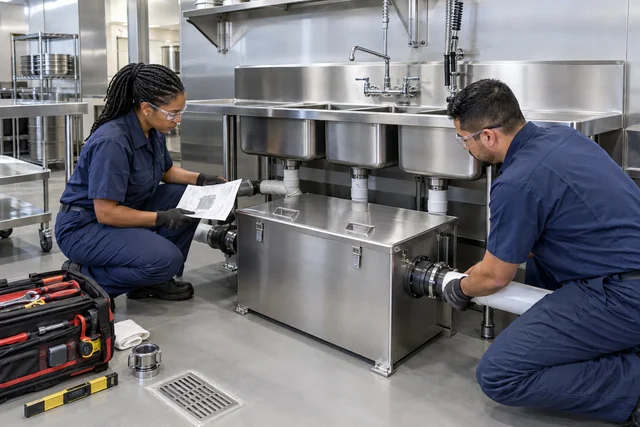
Record the unit, accessible connections, maintenance history, and operating needs. Manufacturer-specific equipment and automatic components must be identified before service or replacement is defined.
General information—not a substitute for the approved scope, equipment instructions, or governing requirements.
240.392.3535Yes. The proposed maintenance plan covers the inlet and outlet of each enrolled grease trap twice each year, with the access and suitable line scope confirmed before the service agreement is finalized.
No. Equipment, connections, operation, maintenance, required records, and authority-specific rules all matter. Service records support—not replace—the authority’s review.
Removed material must be transported to an approved receiving or disposal facility, not discharged onsite. Required handling and receiving documentation should be identified.
Share the symptoms, property address, access information, and any timing constraints. For an urgent problem, call directly.