
Water-Service Lines
Installation, repair, and replacement planning for private domestic water service between the approved utility point and building connection.
- Route and length review
- Pipe sizing and material
- Entry, valve, and testing plan
Planned water-service and sewer-lateral work for homes, businesses, and multifamily properties—built around discovery, coordination, excavation, installation, testing, and closeout.

Licensed plumbing scopePrivate-side water and sanitary work
Property-focused planningHomes, businesses, and communities
Route & restoration reviewAccess, surfaces, depth, and conflicts
Utility coordinationPermit, inspection, and shutdown planning
The route, depth, material, existing utilities, building connection, utility responsibility, access, inspections, and restoration all affect the proper scope. Emerald starts by defining what is known—and what must be discovered.
Installation, repair, and replacement planning for private domestic water service between the approved utility point and building connection.
Repair and replacement of private building sewer piping, with route, grade, depth, access, connection, and restoration requirements defined.
Phased investigation and repair planning for suspected underground water loss, damaged piping, settlement, or localized failure.
Planning for eligible septic-to-public-sewer conversions, including utility point confirmation, private piping, permits, abandonment, and restoration scope.
Private water and sanitary piping for commercial, multifamily, renovation, and capital-improvement projects within an approved plumbing scope.
Controlled early investigation when records, endpoints, depth, conflicts, or existing conditions are not adequately verified for fixed repair pricing.
Water and sewer projects have different materials, testing, elevations, access needs, and connection requirements. Each scope is planned around the property and governing utility.

Define the service point, pipe size, material, route, depth, valves, building entry, testing, flushing, and restoration before construction begins.
Plan water-service work →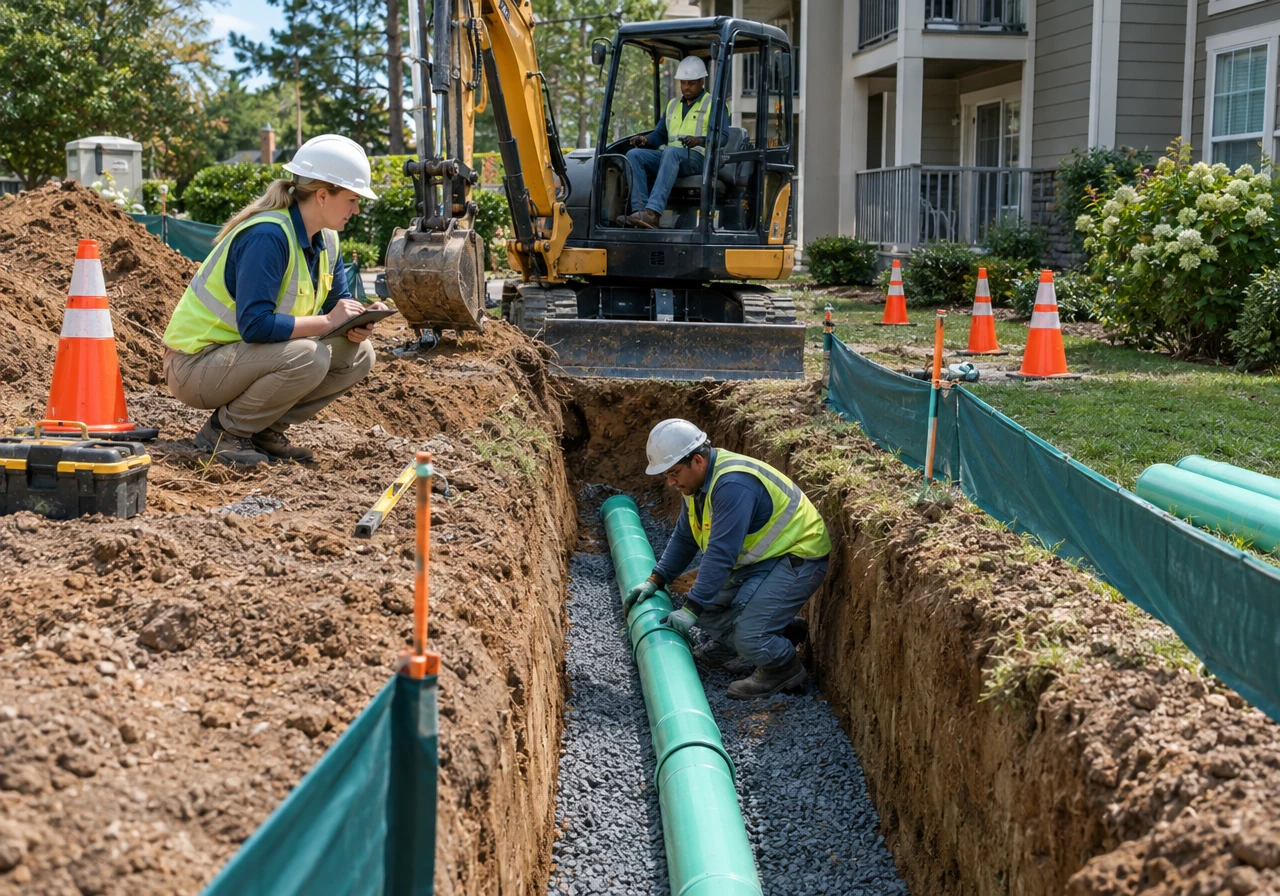
Confirm elevations, route, depth, capacity, pipe condition, cleanouts, connection limits, inspections, and surface restoration for a complete scope.
Plan sewer-lateral work →Utility ownership does not always end in the same place. The utility, property owner, contractor, municipality, and restoration trades may each control a different part of the work.
Request Scope Review →Availability, meter or connection location, fees, shutdowns, and utility-controlled work must be confirmed.
Pipe, trench, depth, conflicts, access, testing, backfill, and surface restoration are defined by approved scope.
Entry, valves, cleanouts, protection, interior tie-in, startup, and final verification complete the system.
Wet ground, low pressure, unusual meter movement, sewer backups, settlement, and repeated repairs can justify a more complete route and condition review.
Tell Us What You See →The meter moves with fixtures off or bills rise without a known reason.
Persistent soft areas, pooling, erosion, or settlement appears along a route.
Building pressure changes, fixtures lose flow, or service becomes inconsistent.
Exterior piping repeatedly blocks, roots return, or repairs no longer hold.
Known galvanized, lead, polybutylene, Orangeburg, cast iron, or deteriorated piping warrants review.
Paving, additions, landscaping, or redevelopment creates an opportunity to address buried piping first.
Complex utility work is strongest when discovery, design responsibilities, pricing, and field authorization are separated clearly.
Gather symptoms, site plans, utility records, prior repairs, photos, and known endpoints.
Review access, route, surfaces, conflicts, elevations, mark-outs, and conditions requiring exposure.
Define utility, permit, inspection, shutdown, disposal, restoration, and third-party responsibilities.
Complete the authorized work, required inspections, tests, backfill, and documented field changes.
Complete approved restoration, provide records, and review system operation and remaining items.
Occupied properties need more than installation labor. Emerald’s project approach identifies shutdown windows, resident or tenant impact, temporary service needs, staging, excavation access, pavement and landscape restoration, testing, inspections, and closeout requirements.
Discuss a Site-Utility Project →Sequence work by building, zone, service, or operating window to control disruption.
Confirm authority, notice, isolation, contingency, cancellation, and restart requirements.
Identify pavement, concrete, landscaping, fencing, traffic control, and final restoration responsibilities.
Track inspections, tests, photos, route changes, concealed conditions, and closeout records.
These general answers help frame early planning. The utility, adopted code, permits, site conditions, engineering, records, and approved contract control the actual project.
Questions?240.392.3535It varies by jurisdiction, utility, system, meter location, connection type, and property. Written utility confirmation is important before pricing or assigning responsibility for taps, meters, mains, shutdowns, charges, inspections, or connection work.
Not responsibly in every case. When endpoints, depth, material, conflicts, access, restoration, or utility requirements are unverified, a phased discovery scope may be appropriate before a final repair or replacement price.
Only when specifically listed in the approved scope. Excavation, haul-off, backfill, compaction, paving, concrete, landscaping, fencing, traffic control, and specialty restoration should each be identified rather than assumed.
Potentially, if public sewer is available and the utility/AHJ approves the connection. Connection fees, capacity, elevations, route, permits, private piping, pumping needs, grease requirements, and septic-system abandonment must be confirmed.
This page focuses on private-side water-service and sanitary sewer work within Emerald’s approved licensing and contract scope. Work owned or controlled by a public utility, roadway authority, or other regulated entity requires separate confirmation and authorization.
Required public utility notification and mark-out, private utility locating where applicable, permits, access approvals, route review, excavation-safety planning, and responsibility confirmation must be completed for the site and scope.
Share the property, system, symptoms, approximate route, surfaces, records, and urgency. For an active emergency, call directly.