Camera qualificationCondition, route, connections, and access

Method-fit reviewBursting, lining, hybrid, or open cut

Controlled accessPits and excavations still may be required

Verified closeoutConnections, testing, camera, and records

Three paths to a sound sewer

“Trenchless” is not one method—and it is not right for every line.

The right approach depends on pipe condition, alignment, grade, material, diameter, connections, access, utility conflicts, permit requirements, and the surface above. Emerald starts with evidence before recommending a method.

Replacement

Pipe Bursting

A bursting head travels through the existing alignment, displacing the old pipe while pulling a new pipe into place.

  • Installs a new replacement pipe
  • Requires launch and receiving access
  • Connections must be identified and restored
  • Clearance and route suitability must be verified
Evaluate for pipe bursting →
Rehabilitation

CIPP Lining

A resin-saturated liner is inserted and cured inside a properly prepared host pipe to form a new pipe within the existing line.

  • Rehabilitates rather than replaces the host pipe
  • Host pipe must meet method requirements
  • Cleaning, access, and connection reinstatement matter
  • Does not correct every belly, grade, or alignment issue
Evaluate for CIPP lining →
Excavation

Open Cut or Hybrid

Targeted or full excavation remains the responsible choice when grade, collapse, access, connections, utility conflicts, or local requirements prevent a trenchless-only solution.

  • Corrects grade and bedding where accessible
  • Allows direct repair of complex connections
  • Can be combined with trenchless methods
  • Restoration scope must be clearly defined
Compare the options →
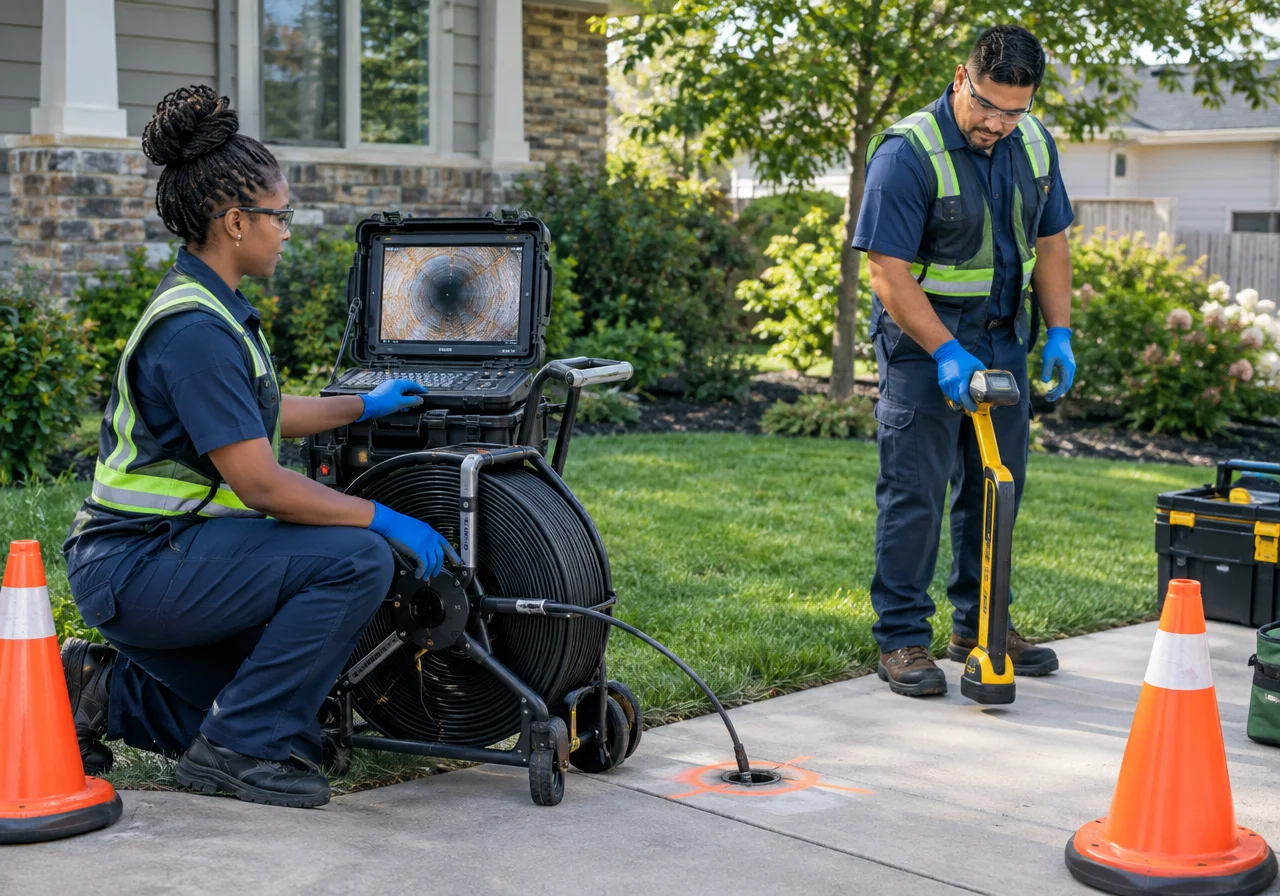
Technicians using a sewer camera and locator to evaluate a buried line
Inspect before selecting the method

A smaller excavation begins with a better investigation.

A camera image alone is not the entire answer. The evaluation should connect what is visible inside the pipe with the line’s actual route, depth, access points, connections, surface conditions, records, and governing requirements.

01

Clean and inspect

Obtain a usable view of cracks, roots, joints, corrosion, deformation, offsets, and obstructions.

02

Locate and map

Confirm the route, depth, endpoints, changes in direction, and areas where access may be required.

03

Identify connections

Document branches, cleanouts, tie-ins, taps, and reconnection or reinstatement responsibilities.

04

Verify site constraints

Review utilities, structures, trees, paving, easements, traffic, occupancy, permits, and restoration.

Request Camera Qualification →
Pipe bursting · full replacement

A new pipe follows the established route.

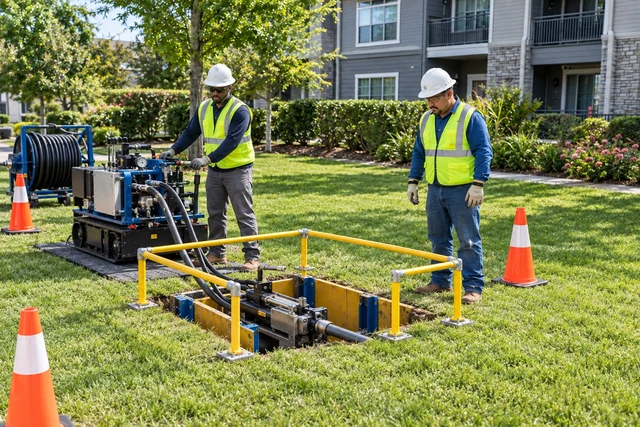
Pipe bursting uses controlled pulling equipment and a bursting head to break or displace the existing pipe while installing a new replacement line. The method can reduce continuous trenching, but it is not excavation-free.

  • Launch and receiving pits or other approved access
  • New pipe sized and selected for the approved design
  • Known services and branches disconnected and restored
  • Clearances from utilities and structures confirmed
  • Required permits, inspections, tests, and final camera verification
Discuss Pipe Bursting →
Illustrative pipe-bursting setup at a compact guarded access pit without a continuous open trench
Method comparison

Same goal. Different technical fit.

This high-level guide helps frame the evaluation; it is not a method selection or fixed scope. Field conditions, design, manufacturer requirements, permits, and the approved contract control.

Evaluation factor
Pipe bursting
CIPP lining
Open cut / hybrid
Primary result
ReplacementNew pipe pulled into the existing alignment
RehabilitationNew structural liner inside the host pipe
Replacement or repairDirect access to pipe, bedding, and grade
Surface disturbance
ReducedAccess pits still required
Often lowestAccess and connection work still required
HighestContinuous or targeted excavation
Grade correction
LimitedGenerally follows the established route
NoDoes not remove bellies or reset grade
Best accessCan reset bedding, alignment, and grade
Host-pipe condition
Method dependentRoute, clearance, and pull path must qualify
CriticalHost pipe must support cleaning and installation
FlexibleDirect access handles severe conditions
Best decision basis
Camera + route reviewAccess, connections, utilities, and design
Camera + liner designCleaning, measurements, cure, and reinstatement
Site and excavation planSafety, access, shoring, haul-off, restoration
Potential trenchless candidates

Conditions that may support a lower-disturbance approach

  • Roots, cracks, corrosion, scaling, or separated joints along a defined route
  • Older materials such as clay, cast iron, Orangeburg, or other deteriorated sewer pipe
  • Valuable paving, landscaping, courtyards, or occupied areas above the line
  • Usable access for approved equipment, pits, cleaning, or liner installation
  • Known connections and a route that can be located and safely controlled
Conditions requiring caution

Why open cut or a hybrid plan may still be needed

  • Bellies, negative grade, failed bedding, or alignment that must be physically corrected
  • Severe collapse, large offsets, obstructions, deformation, or unknown route conditions
  • Branches, taps, cleanouts, or transitions that cannot be accessed or reinstated reliably
  • Insufficient separation from utilities, structures, property lines, or environmental constraints
  • Utility-owned, public-main, roadway, easement, or permit requirements that control the method
Evidence-led project process

Qualify the line before committing to the method.

Each step narrows uncertainty and protects the final scope, schedule, property, and customer decision.

1

Intake & records

Review symptoms, history, plans, prior repairs, access, surfaces, and ownership boundaries.

2

Clean, camera & locate

Prepare the line for inspection and document condition, route, depth, and connections.

3

Method qualification

Compare bursting, lining, targeted excavation, or a hybrid approach against actual conditions.

4

Scope & coordination

Define permits, utility/AHJ requirements, access, bypass needs, pits, restoration, and exclusions.

5

Authorized installation

Complete the approved work with required safety controls, inspections, connections, and tests.

6

Verify & close out

Camera the completed line where applicable, document results, restore approved surfaces, and hand off records.

Commercial & multifamily sewer work

Reduce disruption without hiding operational risk.

Occupied properties require a plan for resident or tenant notices, access, shutdowns, bypass pumping where required, parking and traffic control, staging, after-hours restrictions, inspections, restoration, and documented closeout.

Discuss a Property Project →
01

Phasing & access

Sequence buildings, zones, pits, equipment, and restoration around property operations.

02

Service continuity

Define shutdown windows, bypass requirements, contingency, notice, and restart procedures.

03

Surface protection

Identify paving, concrete, landscaping, fencing, traffic, and specialty restoration responsibilities.

04

Documented closeout

Track inspections, videos, connections, tests, concealed conditions, field changes, and warranties.

Trenchless sewer questions

Know what the method can—and cannot—solve.

These general answers support early planning. The inspection, site, utility, adopted code, permit, manufacturer requirements, engineering where applicable, and approved contract control the actual project.

Questions?240.392.3535
Is pipe bursting the same as sewer lining?+

No. Pipe bursting is a replacement method that pulls a new pipe through the existing alignment while breaking or displacing the old pipe. CIPP lining rehabilitates the existing host pipe by curing a liner inside it.

Does trenchless work require any digging?+

Usually, yes. Pipe bursting commonly needs launch and receiving access. Lining needs approved access and may require excavation for connections or defects. Pit size, location, safety controls, and restoration depend on the method and site.

Can trenchless work fix a sewer-line belly?+

Not necessarily. A liner generally follows the existing pipe profile and does not correct failed bedding or negative grade. Bursting also typically follows the established route. Excavation may be needed to reset grade or alignment.

Can every broken or collapsed pipe be lined?+

No. The host pipe must meet the selected lining system’s requirements and allow cleaning, measurement, installation, and curing. Severe collapse, obstruction, deformation, access limitations, or connection conditions may require another method.

How do you determine whether my line qualifies?+

Qualification may include cleaning, camera inspection, locating, route and depth review, connection mapping, site access, utility conflicts, pipe measurements, records, permit requirements, and an evaluation of restoration and operational constraints.

Will trenchless work cover the public sewer main or tap?+

Not automatically. This page focuses on private-side work within Emerald’s approved licensing and contract scope. Utility-owned mains, taps, roadways, easements, and utility-controlled work require written confirmation and separate authorization.

Is trenchless always less expensive or faster?+

No universal claim is responsible. Trenchless methods can reduce excavation and restoration under suitable conditions, but access, cleaning, equipment, connections, bypass, permits, utilities, and field conditions determine the final schedule and price.
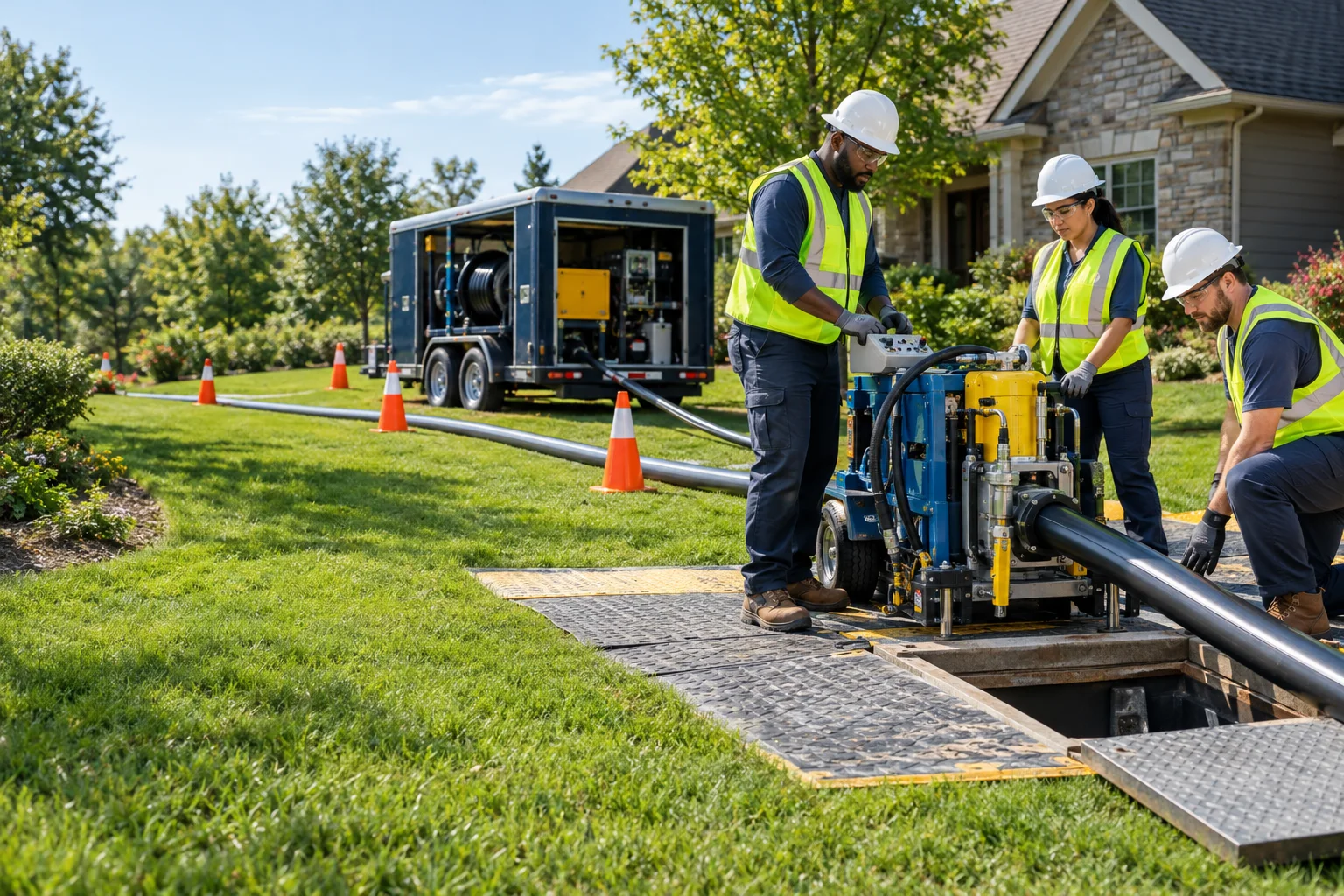
Request a trenchless evaluation

Start with the pipe condition—not a promised method.

Share the property, symptoms, line history, surfaces above the route, available videos or plans, and urgency. For an active backup or emergency, call directly.

Call for service240.392.3535
  • Camera and route qualification
  • Pipe bursting and lining evaluation
  • Residential, commercial, and multifamily planning