
Equipment assessment
Review accessible equipment, symptoms, service history, and relevant safety concerns before recommending work.
Assessment for temperature issues, leaks, error codes, ignition problems, and other water-heater concerns—with repair and replacement options kept clear.
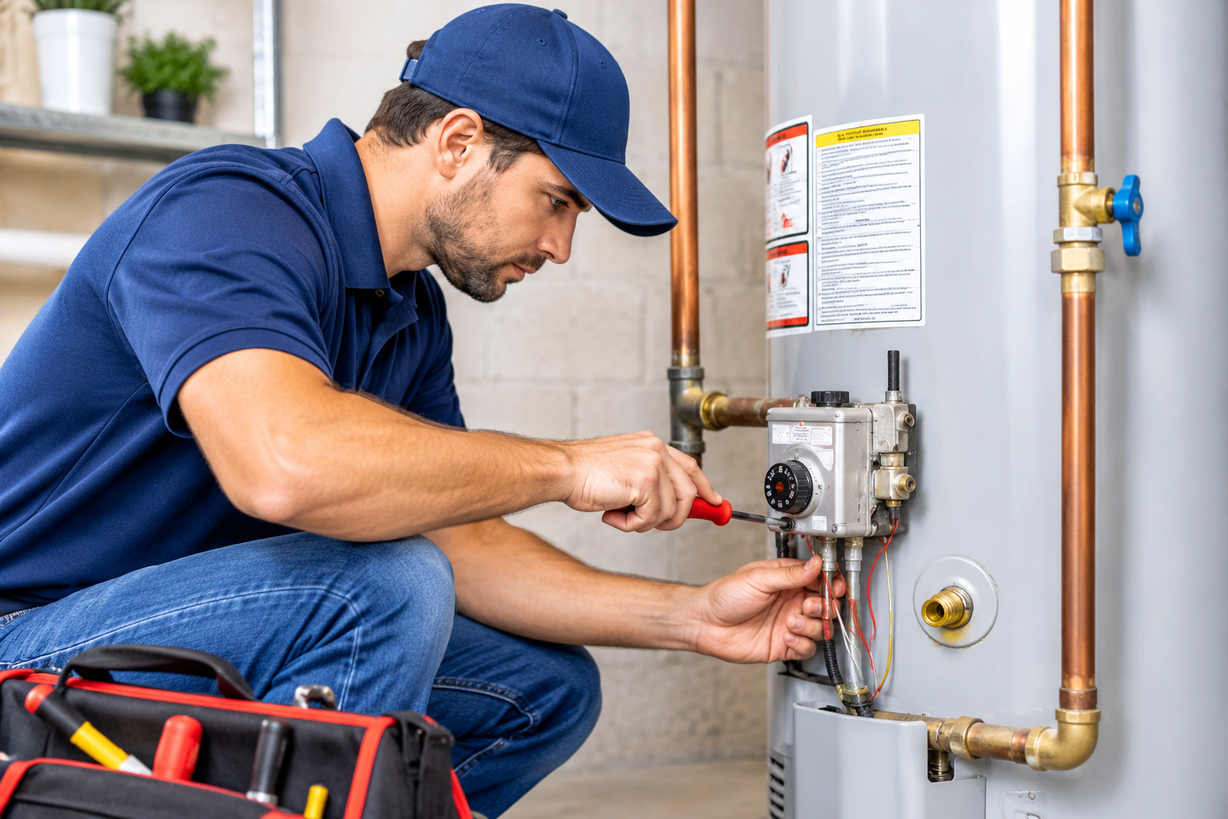
Provide the manufacturer, model, fuel type, approximate age, symptoms, and a photo of the equipment if safe. A component fault, leaking tank, venting issue, power or fuel problem, and demand mismatch need different decisions.
Review accessible equipment, symptoms, service history, and relevant safety concerns before recommending work.
Discuss suitable parts, manufacturer requirements, availability, and the limits of a proposed repair.
When replacement is appropriate, review capacity, fuel, venting, access, permits, and startup.
Explore serviceGood intake helps separate the urgent symptom, the investigation, and the approved work.
Property address and a contact who can authorize work
Symptoms, photos, access restrictions, and previous service records
Approved scope, scheduling, permits, and restoration responsibilities

A water-heating complaint may involve equipment, supply piping, controls, or operating conditions. Identify the system and symptoms before selecting a repair or replacement path.
General information—not a substitute for the approved scope, equipment instructions, or governing requirements.
240.392.3535No. The equipment condition, fault, parts, repair cost, and property demand guide the decision. A leaking tank can present a different situation from a serviceable component.
Share the exact model and symptoms so equipment-specific service, qualifications, parts, and scheduling can be confirmed.
Not automatically. Dimensions, clearances, capacity, fuel or electrical supply, venting, drainage, and local requirements must be reviewed.
Share the symptoms, property address, access information, and any timing constraints. For an urgent problem, call directly.