
Route & material review
Gather utility records, service material, known defects, connection points, locating information, and access restrictions.
Explore serviceCommercial and property-side water-service replacement planning with trenchless options considered only where the route, material, utilities, and authority allow.

Water-service work must use systems and materials approved for the application. Route, depth, bends, utility conflicts, connection points, access pits, shutoffs, and required testing must be understood before a trenchless approach is selected.
Gather utility records, service material, known defects, connection points, locating information, and access restrictions.
Explore serviceEvaluate approved pulling, boring, or replacement methods with qualified personnel and the serving utility. No universal CIPP or bursting suitability is assumed.
Plan the required pressure tests, flushing, disinfection or sampling, inspections, reconnection, and surface restoration.
Good intake helps separate the urgent symptom, the investigation, and the approved work.
Property address and a contact who can authorize work
Symptoms, photos, access restrictions, and previous service records
Approved scope, scheduling, permits, and restoration responsibilities
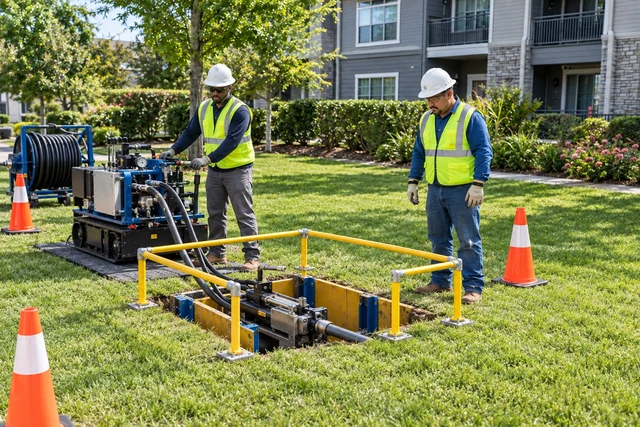
Private piping, public connections, and utility responsibilities must be separated. Plan access, approved materials, connection details, shutdowns, testing, and restoration for the specific route.
General information—not a substitute for the approved scope, equipment instructions, or governing requirements.
240.392.3535Not by assumption. Only a specifically approved potable-water system and accepted method may be considered under the serving authority’s requirements.
No. Utility conflicts, material, bends, access, easements, and the existing condition may require a new route or a different method.
Use a common scope including connections, access pits, testing, shutdowns, approvals, and restoration so the comparison reflects the complete project.
Share the symptoms, property address, access information, and any timing constraints. For an urgent problem, call directly.