
Records & site feasibility
Review property records, existing approvals, use, symptoms, site limitations, and the required qualified site evaluation.
New and replacement onsite wastewater systems planned around property eligibility, design, permits, access, and long-term maintenance.
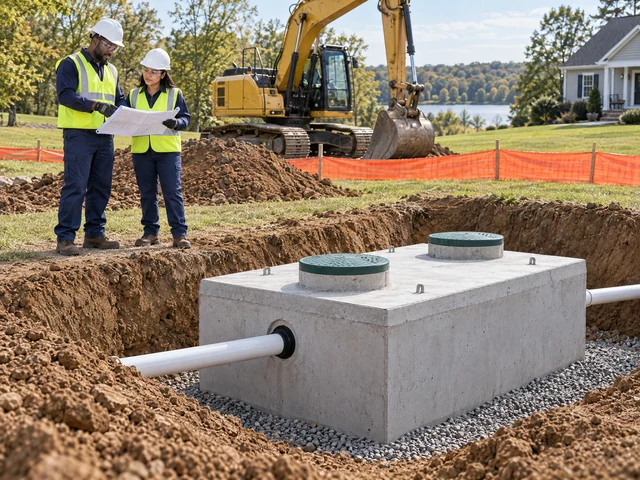
The lot, wastewater loading, soil and site findings, dispersal area, elevations, equipment, reserve requirements, and operating needs determine the approved system. Required evaluation and design must be performed by appropriately qualified professionals before installation is committed.
Review property records, existing approvals, use, symptoms, site limitations, and the required qualified site evaluation.
Identify designer responsibilities, health-department reviews, system requirements, current installer authority, and permit conditions.
Coordinate approved excavation, tanks, piping, equipment, inspections, startup, records, and owner operation or maintenance responsibilities.
Good intake helps separate the urgent symptom, the investigation, and the approved work.
Property and existing-system records, use, occupancy, and available approved plans
Qualified site evaluator/designer, health-department process, and required installer credentials
Access, utilities, groundwater, soils, restoration, inspection points, and maintenance requirements

A suitable system starts with the approved site and design. Installation planning also accounts for access, utilities, inspections, future service, and the owner’s operation and maintenance responsibilities.
General information—not a substitute for the approved scope, equipment instructions, or governing requirements.
240.392.3535No. Property conditions, loading, site evaluation, local requirements, and approved design determine the acceptable system.
Requirements must be checked with the governing health authority for the actual property and scope. Do not assume an existing approval covers a revised installation.
The approved scope should identify inspection records, as-built information, equipment manuals, alarms, warranties, and required ongoing operation or maintenance.
Share the symptoms, property address, access information, and any timing constraints. For an urgent problem, call directly.