
Identify the unit
Confirm manufacturer, model, listing, connected waste stream, controls, and approved installation details.
Evaluation and service planning for automatic grease-removal and interceptor equipment, based on the actual manufacturer, model, application, and approval requirements.
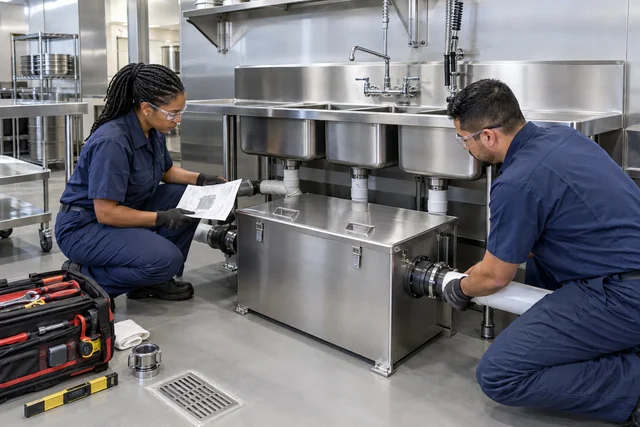
Automatic grease-removal units, passive grease interceptors, oil-water separators, and solids interceptors are different systems. Share the nameplate, manual, connected fixtures, application, and service history so the correct equipment and maintenance requirements can be identified.
Confirm manufacturer, model, listing, connected waste stream, controls, and approved installation details.
Use the equipment manual and authority requirements to establish cleaning, removal, controls, and disposal responsibilities.
Check compatible components, service qualifications, available parts, operating impact, and approval requirements.
Explore serviceGood intake helps separate the urgent symptom, the investigation, and the approved work.
Property address and a contact who can authorize work
Symptoms, photos, access restrictions, and previous service records
Approved scope, scheduling, permits, and restoration responsibilities
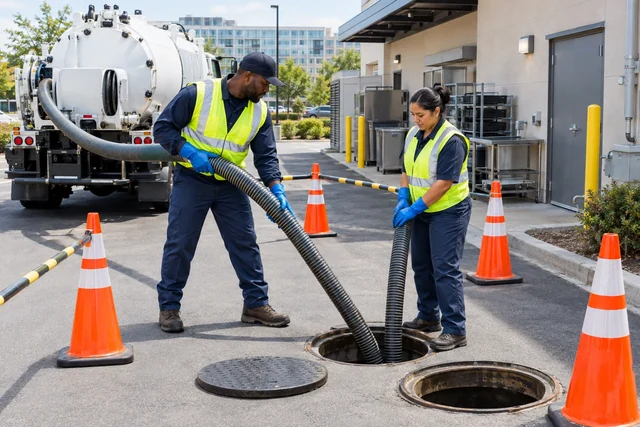
Record the unit, accessible connections, maintenance history, and operating needs. Manufacturer-specific equipment and automatic components must be identified before service or replacement is defined.
General information—not a substitute for the approved scope, equipment instructions, or governing requirements.
240.392.3535No. Different devices use different separation and removal methods. Service must follow the actual equipment and its intended waste stream.
Do not assume interchangeability. Listing, design, contents, waste handling, authority requirements, and the intended application must be checked.
No manufacturer affiliation or factory authorization is claimed here. Any equipment-specific service qualification must be verified before work is offered.
Share the symptoms, property address, access information, and any timing constraints. For an urgent problem, call directly.