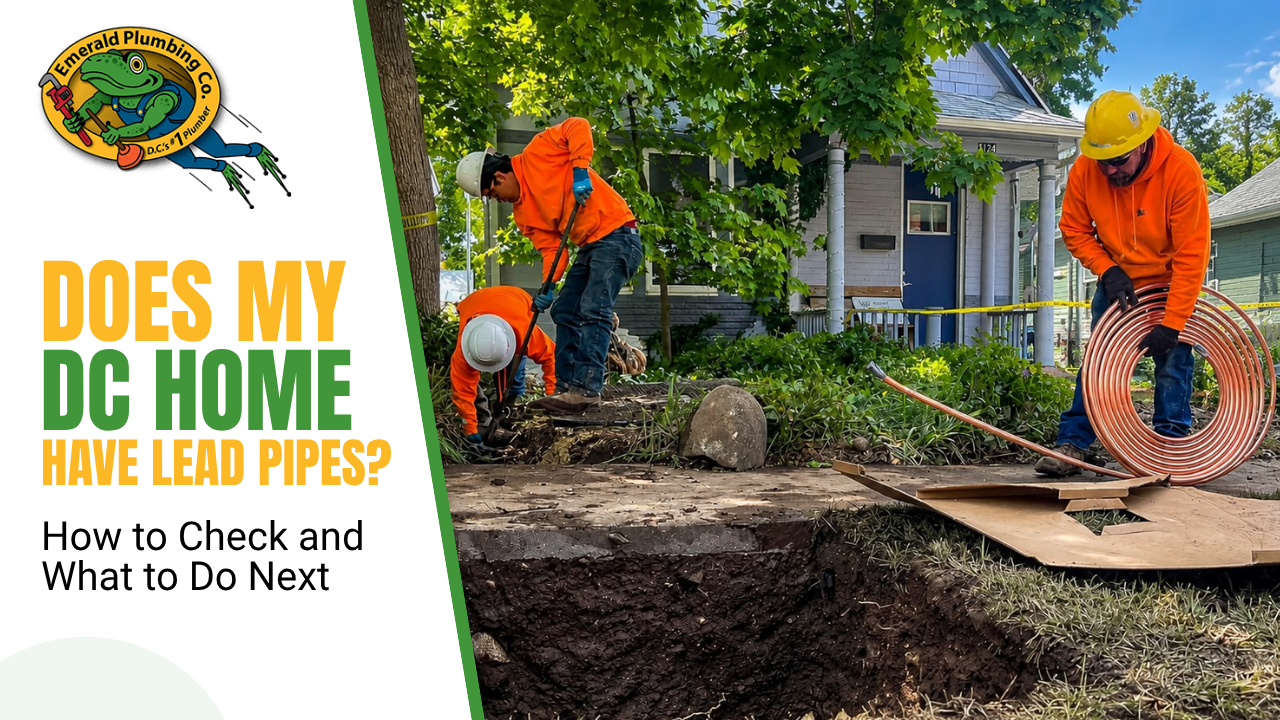
Does My DC Home Have Lead Pipes? How to Check and What to Do Next
There is a letter sitting in the DC Water database right now that your home may never have received. It lists your address. It notes that the service line, the pipe connecting your home to the city's main water supply, may be made of lead.
If your home was built before 1986, there is a real chance that lead is still flowing alongside your water every single day. Not dramatically. Not visibly. Silently. Lead has no color, no taste, and no smell. And yet the science has been settled for decades: there is no known safe level of lead exposure for a child. None.
Here is what most DC homeowners do not know: you can check right now whether your home has lead pipes, and DC has an assistance program that may cover the entire cost of replacing the private side at no charge to you.
Why Lead Pipes Are a Specific Problem in Washington DC
Washington DC has one of the oldest water infrastructure networks in the United States. Homes throughout Capitol Hill, Columbia Heights, Shaw, Georgetown, Anacostia, and Petworth were built and plumbed before 1986, when the federal government banned lead in residential plumbing materials.
Before that ban, lead was the standard. It was cheap, flexible, and had been used in plumbing for over a century. The problem, understood with increasing urgency since the 1970s, is that lead leaches into water flowing through lead pipes, particularly water that is soft or acidic.
A service line is the pipe that connects the city's water main in the street to your home. In many DC neighborhoods, both the city's portion and the homeowner's private portion of that pipe are made of lead. DC Water has been replacing its portion for years. The homeowner's private side was historically the homeowner's financial responsibility, until programs like LPRAP stepped in.
Maryland and Northern Virginia homes are not immune. Older homes in Silver Spring, Takoma Park, Alexandria, and other DMV suburbs were built under the same pre-1986 standards. If your home pre-dates 1986 and you have not had your service line inspected, you do not know what you have.
How to Check Whether Your DC Home Has Lead Pipes
Step 1: Check DC Water's Lead Service Line Map
DC Water maintains an online service line map at dcwater.com. Search your address to see what the utility's records show. Note that records are not always complete: "unknown" material means they do not have confirmed information, not that the line is safe.
Step 2: Inspect the Pipe Near Your Water Meter
Locate your water meter, typically in the basement near where the main water line enters. Scratch the pipe surface gently with a coin, and wash your hands afterward:
Dull gray, soft, with a shiny silver color underneath: lead
Hard surface that resists scratching, copper color: copper (safe)
Magnetic when you hold a magnet to it: galvanized steel (not lead, but with its own aging issues)
Step 3: Request a Free Lead Test from DC Water
DC Water offers free lead testing for homeowners on its system. The test requires collecting a water sample after at least six hours of non-use, typically first thing in the morning before any water is run.
Step 4: Have a Licensed Plumber Inspect Your Service Line
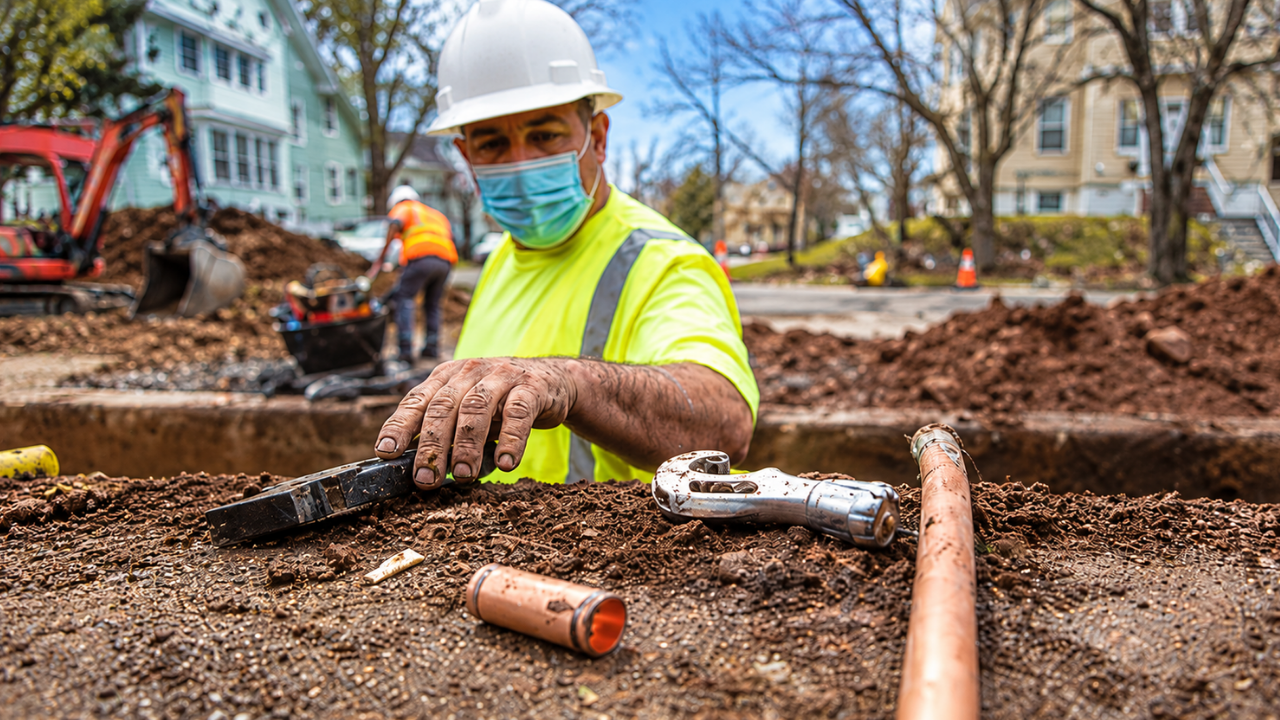
The most reliable method is a professional inspection by a licensed plumber. A professional can confirm the material of your service line and document the finding, which can help if DC Water's map is unclear or you believe it is wrong.
Emerald Plumbing offers free estimates for water line repair and replacement, including service line inspections, across DC, Maryland, and Virginia. Call (240) 392-3535 or visit emerald911.com.\
What Is DC Water's LPRAP, and What Does It Cover?
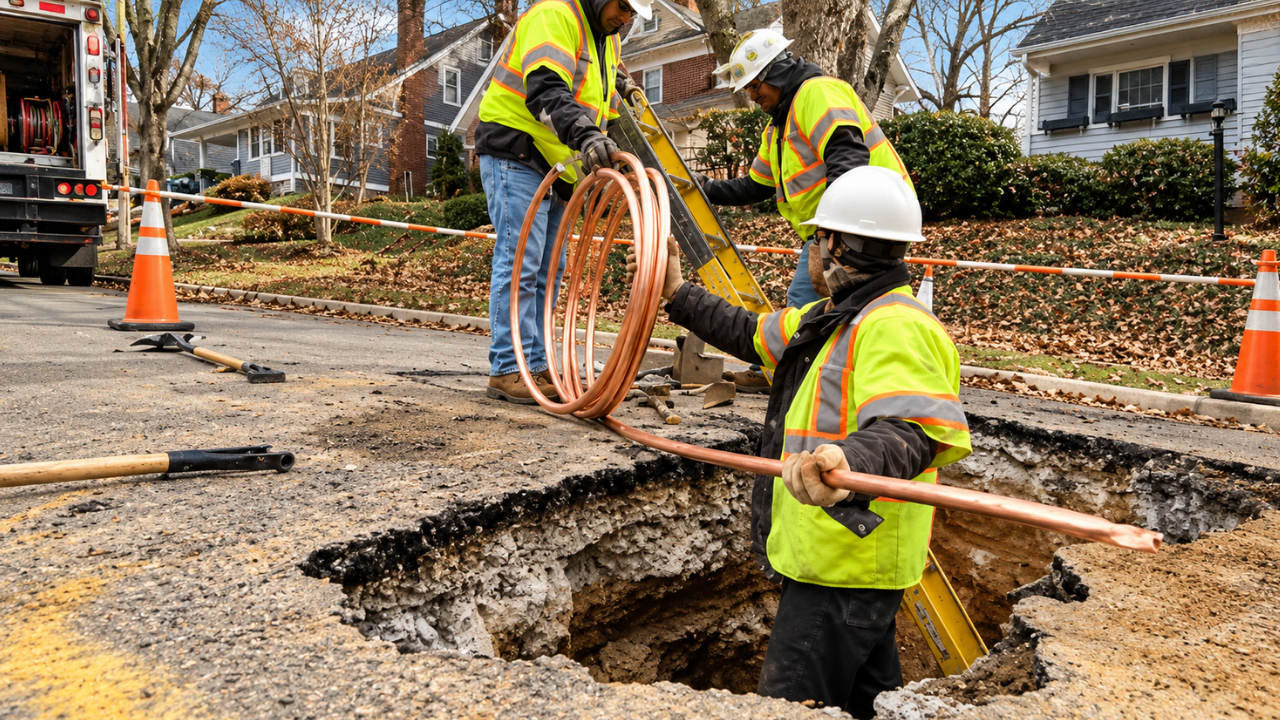
LPRAP stands for the Lead Pipe Replacement Assistance Program. It helps DC homeowners replace a lead pipe on their private property, and it is easy to miss if you do not know to look for it.
Who Is Eligible
LPRAP applies when DC Water's service line map shows lead, galvanized, or brass pipe on the private side and a non-lead pipe, such as copper, in public space. This usually happens when the city has already replaced its portion but the homeowner's side was left behind.
What It Covers
According to DC Water's lead pipe replacement programs page, every homeowner enrolled in LPRAP receives a 100% discount on the private-side replacement. Income-eligible households have the full cost paid by the Department of Energy and Environment (DOEE), while other enrolled homeowners are covered through a combination of District funds and DC Water infrastructure funding.
How It Works
Check the DC Water service line map to confirm your pipe materials
Apply through DOEE, online or by mail, and contact DOEE with questions at [email protected] or 311
Receive DC Water's Approved Contractor List from DOEE and choose a contractor from it
Do not start work until you have received your benefit confirmation letter
Keep in mind this is not a reimbursement program, so approval comes first
If Both Sides of Your Pipe Are Lead
LPRAP is for homes with lead only on the private side. If the public side is also lead, DC Water offers a voluntary full replacement program, and when the city replaces pipes on your street as part of a capital project, private-side replacement during that project is free regardless of income. Check DC Water's programs page to see which applies to you.
The most common LPRAP problem: many homeowners receive a DC Water letter, feel overwhelmed by the application process, and do nothing, and the chance to replace the pipe at little or no cost passes. If that sounds familiar, call Emerald Plumbing at (240) 392-3535 and we will help you understand what to do next, starting with a lead pipe replacement inspection and estimate.
What Are the Health Risks of Lead Exposure Through Water?
Lead is a neurotoxin. The CDC, WHO, and American Academy of Pediatrics have each concluded that no known level of lead exposure is safe for children. Effects of lead exposure include:
Developmental delays and reduced IQ
Learning and attention difficulties
Behavioral problems
Impaired hearing and slowed physical growth
For adults, chronic exposure is linked to increased blood pressure, kidney damage, and cardiovascular disease. Pregnant women face particular risk, as lead can cross the placental barrier and affect fetal development.
The key word is chronic, meaning long-term, daily exposure at low levels. Drinking water from lead pipes for years, especially with young children at home, creates a cumulative exposure that public health authorities treat with urgent seriousness.
Bottom line: if your home has lead service lines and you have children under six, pregnant household members, or simply value your family's long-term health, getting the pipe replaced is the responsible action. And in DC, you may be able to get it done for little or nothing.
Step-by-Step Action Plan for DC, Maryland, and Virginia Homeowners
If You Are a DC Water Customer
Check the DC Water service line map at dcwater.com
Request a free lead water test
Call a licensed plumber for a professional service line inspection
Determine your LPRAP eligibility based on your pipe materials
If eligible, apply through DOEE and choose a contractor from DC Water's Approved Contractor List
If You Are in Maryland or Northern Virginia
Contact your water utility, such as WSSC Water in Maryland or Virginia American Water in Alexandria, about their lead service line identification programs
Request a certified water lead test through your utility or a certified laboratory
Have a licensed plumber inspect your service line for material identification
Contact your local health department if children have been tested for elevated blood lead levels
Frequently Asked Questions
How do I know if my DC home has lead pipes?
Check DC Water's service line map at dcwater.com using your address. You can also inspect the pipe near your water meter. Lead is dull gray, soft, and shows a shiny silver color when scratched with a coin. A licensed plumber provides a definitive identification during a service line inspection.
What is the LPRAP program in DC?
LPRAP (Lead Pipe Replacement Assistance Program) helps eligible DC homeowners replace a lead, galvanized, or brass pipe on private property when the public side is non-lead. Enrolled homeowners receive a 100% discount on the private-side replacement. Applications go through DOEE, and the work must be done by a contractor from DC Water's Approved Contractor List, starting only after you receive your benefit confirmation letter.
Is it safe to drink tap water if I have lead pipes?
Lead can leach into drinking water from lead service lines, particularly when water sits in the pipe overnight. Until your line is replaced, flushing the cold tap before use and using a filter certified to NSF/ANSI 53 for lead can help reduce exposure. Follow DC Water's current flushing guidance. Replacement is the only permanent solution.
Does lead pipe replacement in DC cost anything?
It depends on your pipe. If your private-side pipe is lead and the public side is not, enrolled LPRAP homeowners receive a 100% discount. If both sides are lead, DC Water's voluntary replacement program applies and the owner pays for the private side, unless the city is replacing your street's pipes as part of a capital project, in which case private-side replacement is free regardless of income. Contact DC Water or a licensed plumber to confirm which applies to you.
How long does lead pipe replacement take?
A typical residential service line replacement takes one to two days, depending on pipe depth, access, and the method used. Your plumber can explain what to expect for your property.
Do Maryland and Virginia homeowners have lead pipe programs?
LPRAP is specific to DC. Maryland homeowners served by WSSC Water should contact WSSC about their lead service line programs, and Virginia homeowners should contact their water utility directly. A licensed plumber in any jurisdiction can conduct a service line inspection and provide options.
Ready to Get Help? Call Emerald Plumbing
Call (240) 392-3535, available 24 hours a day, 7 days a week, including weekends. Emerald Plumbing inspects service lines and provides lead service line replacement across Washington, D.C., Maryland, and Northern Virginia.
Request service online for a free estimate and a fast response, and see what neighbors say in our customer reviews.
Emerald Plumbing | Virginia Lic. 2705188372 | DC Lic. PGM40000107 | Maryland Lic. 84171 | BBB A+ | Serving the DMV since 2001
