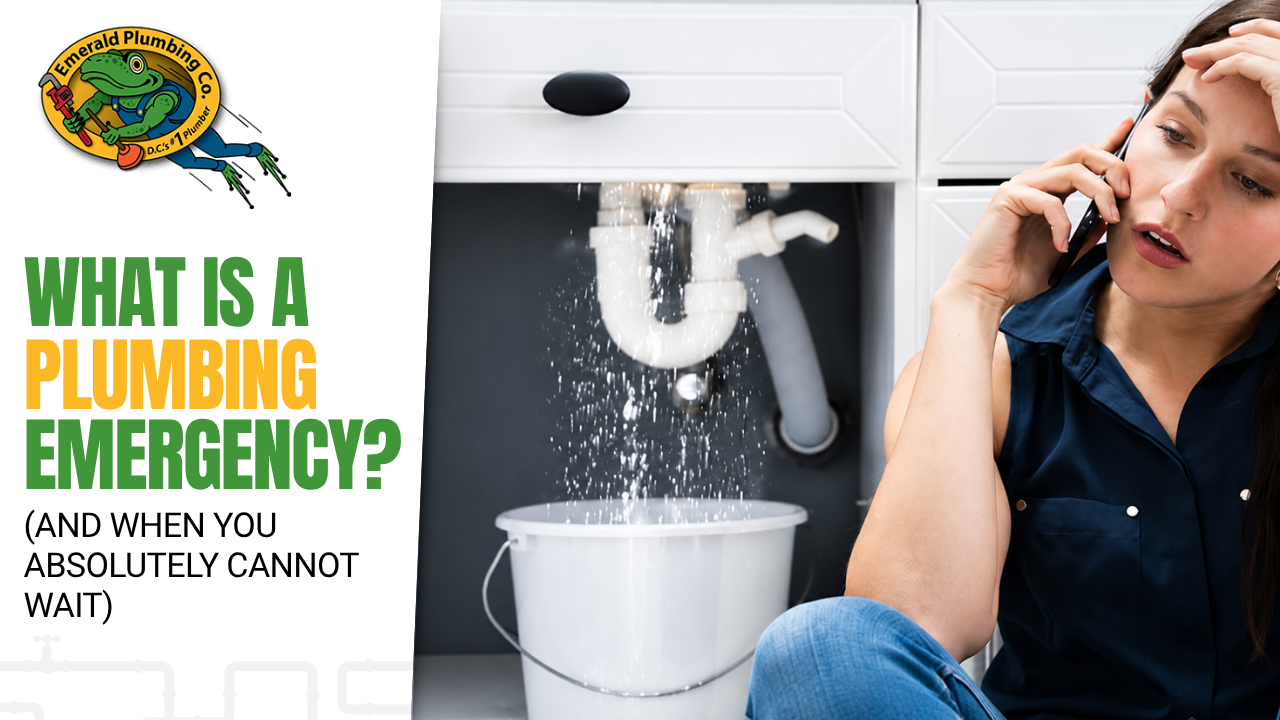
What Is a Plumbing Emergency? (And When You Absolutely Cannot Wait)
It is 11:30 on a Tuesday night. You get up to use the bathroom, step off the bottom stair, and feel cold water soaking into your sock. Spreading. Coming from somewhere inside the wall.
Your first question: Is this an emergency? Do I call someone now, or can this wait until morning?
That moment of hesitation costs homeowners thousands of dollars every year — not because they panicked, but because they waited too long. By morning, a slow seep had become a saturated subfloor. A dripping fitting had burst. A backed-up drain had become sewage in the basement.
This guide gives you a clear, honest answer: what actually counts as a plumbing emergency in the DMV — and when can you safely wait? Emerald Plumbing serves Washington DC, Maryland and Virginia 24 hours a day, 7 days a week. If something is happening right now, call (240) 392-3535.
What Counts as a Plumbing Emergency? The Definition
A plumbing emergency is any situation where:
Water is actively damaging your home's structure, systems or contents
Your health or safety is at immediate risk
You have lost access to critical water functions — no water at all, no working toilet in a single-bathroom home, no hot water with young children or elderly residents present
The problem will become significantly worse if left untreated for more than a few hours
The 7 Situations That Require an Immediate Call
🚨 1 — Burst or Ruptured Pipes
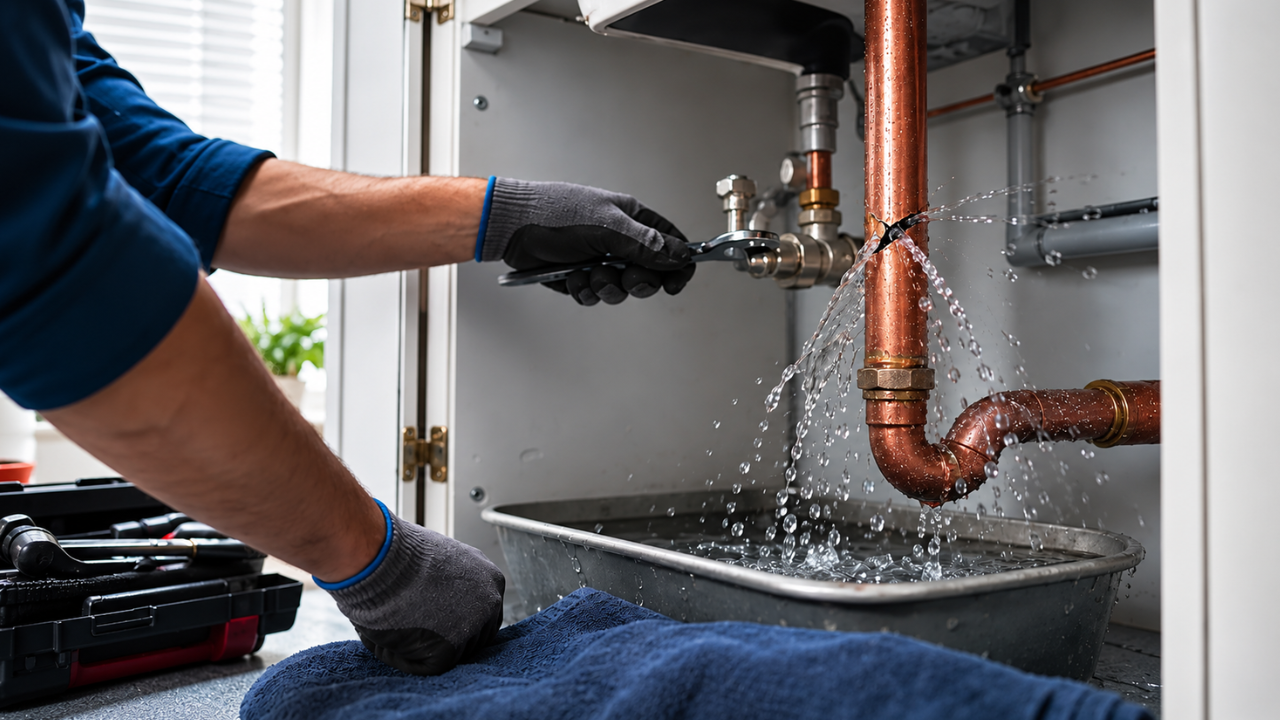
The clearest emergency on this list. A burst pipe releases water at high pressure into your home's walls, floors or ceilings. Within minutes, water can reach electrical systems and subfloors. Within hours, conditions exist for mould. Shut off your main water supply immediately, then contact our emergency plumbing team.
🚨 2 — Sewage Backing Up Into Your Home
Raw sewage backing up into your bathtub, floor drain or toilet is a health emergency. Sewage contains bacteria, viruses and pathogens that cause serious illness. Do not use any water. Do not flush. Do not plunge. If you suspect a deeper sewer line problem, our sewer repair and installation services can diagnose the root cause after the immediate situation is controlled. Call an emergency plumber immediately.
🚨 3 — Complete Loss of Water
No water from any tap suggests a main line break, frozen service line (common in DC-area winters) or a valve failure. Total water loss with children, elderly residents or medical needs in the household qualifies as an emergency. Issues at the main line level may also require water line repair and replacement.
🚨 4 — Gas Smell Near Plumbing or Your Water Heater
Evacuate immediately. Do not touch any electrical switches. Call your gas company and 911 before calling a plumber. This is the highest-priority situation on this list.
🚨 5 — Overflowing Toilet That Will Not Stop
Shut off the toilet's supply valve (behind and below the bowl), place towels to contain the water, and call for emergency service. A toilet overflow that cannot be controlled with a plunger indicates a serious blockage that often points to a drain line problem requiring professional drain cleaning.
🚨 6 — Active Leak at a Pipe Joint, Valve or Fitting
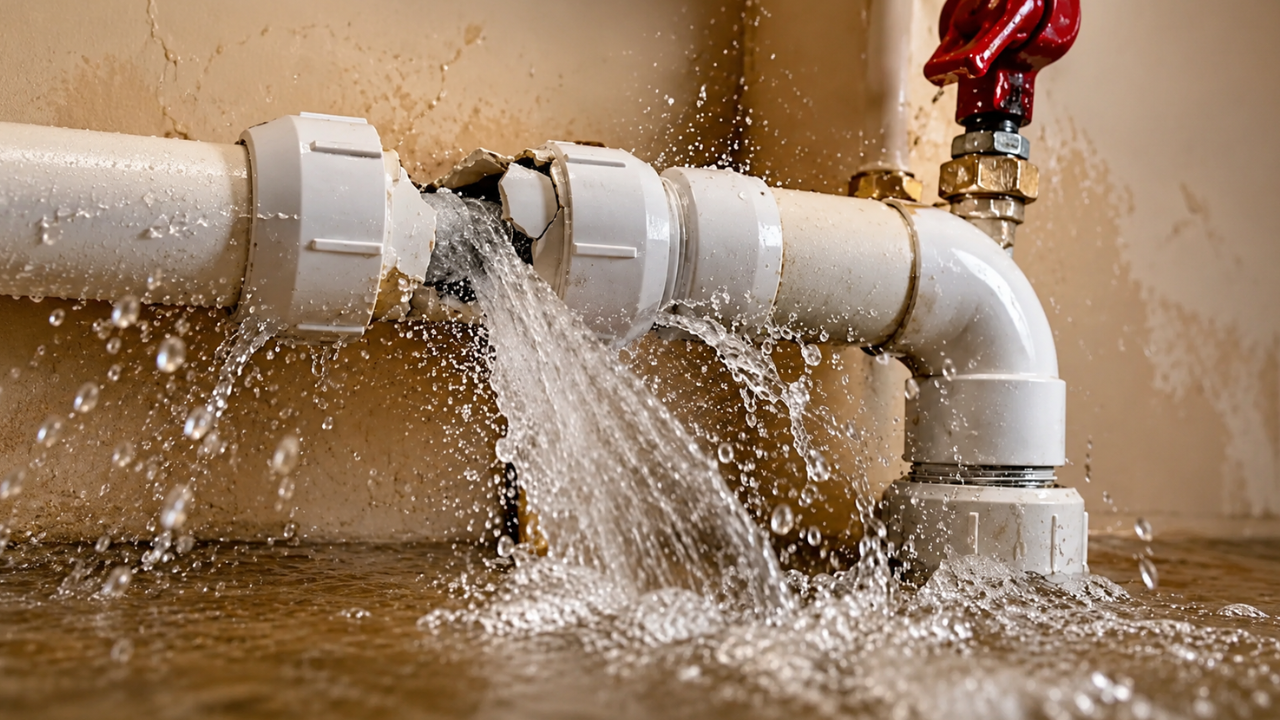
A steady stream — not a drip — from any pipe connection is an emergency. These connections can fail completely without warning. If you suspect the leak is hidden inside a wall or under a slab, leak detection and repair should be your next call. Shut off the nearest supply valve if possible, then call.
🚨 7 — Water Heater Leaking From the Tank Body
An actively leaking water heater tank can flood a basement within hours. If the pressure relief valve is involved, there is also a safety risk. Shut off the cold water supply to the heater and review your options with our water heater repair specialists right away.
What Is NOT a Plumbing Emergency — And What to Do Instead
Slow-draining sink or shower: Unless the drain is completely blocked and water is overflowing, a slow drain can wait for a scheduled appointment. Avoid chemical drain cleaners and book a professional drain cleaning service.
Dripping faucet: Wasteful but not structural. Can typically wait 24–48 hours for a scheduled appointment. Put a bucket underneath in the meantime.
Running toilet: Wasting water but not a structural emergency unless accompanied by overflow or backing up. Address during normal business hours through our plumbing repairs scheduling.
Low pressure in one fixture: Usually a clogged aerator or partially closed valve — a scheduled appointment issue.
Minor under-sink drip that is fully contained: If it is stable and not spreading, it can typically wait until a scheduled appointment the next day.
📋 The Rule of Thumb
If water is spreading, escalating or creating a health risk — call immediately. If the situation is stable, contained and not worsening — schedule at your convenience. Unsure? Call Emerald at (240) 392-3535 and we will give you an honest assessment.
What to Do While You Wait for the Emergency Plumber
Shut off the water supply — at the fixture valve or the main supply to the house
Turn off the water heater if you shut off the main supply (prevents damage to the heating element)
Do not use any drains if sewage is backing up — any water use makes it significantly worse
Document everything — photos and video before any cleanup begins, for insurance
Contain the water — towels, buckets and plastic sheeting limit spread while you wait
Ventilate if there is a gas smell — open windows and leave the property
For guidance on locating your main shut-off and understanding your home's water system, the Insurance Institute for Business & Home Safety offers a solid homeowner reference on plumbing preparedness. Hour You Wait Makes It More Expensive
Water damage does not stay where the water stops. It moves through subfloors into joists, through drywall into insulation, through wall cavities into structural framing — and it moves quickly.
The difference between calling immediately and waiting until morning can be the difference between a $400 emergency call-out and a $15,000 remediation job. Here is what the timeline of an untreated burst pipe looks like:
First 30 minutes: Water spreads across floor. Fix cost: $400–$800
1–2 hours: Water penetrates flooring and reaches subfloor. Fix cost: $1,500–$4,000
6–12 hours: Subfloor saturated, mould conditions begin. Fix cost: $4,000–$10,000
24–48 hours: Active mould growth possible, structural damage to joists likely. Fix cost: $10,000–$25,000+
72+ hours: Mould visible, structural integrity of flooring compromised. Fix cost: $25,000+
Frequently Asked Questions
Q: What should I do first in a plumbing emergency?
Shut off the water supply immediately — at the fixture's individual shut-off valve or at the main supply valve for your home. Then call a licensed emergency plumber. Stopping the flow of water is the single most effective action you can take while waiting for help.
Q: Is a burst pipe always a plumbing emergency?
Yes. A burst pipe is one of the clearest plumbing emergencies a homeowner can face. Water releases at high pressure into your home's structure and escalates rapidly into subfloor damage, wall damage and mould conditions. Our pipe repair services are available around the clock for exactly this situation.
Q: Does Emerald Plumbing offer 24-hour emergency service in the DMV?
Yes. Emerald Plumbing provides 24/7 emergency plumbing service across Washington DC, Maryland and Northern Virginia. We answer calls at all hours, including weekends and holidays, and dispatch licensed plumbers throughout the DC Metro area. See our full service area coverage to confirm your location.
Q: Is a sewage backup a plumbing emergency?
Yes — and one of the most serious. Sewage contains bacteria, viruses and pathogens that pose direct health risks. Do not use any water fixtures, do not flush, and call an emergency plumber immediately. A sewage backup also indicates a serious sewer line problem. Our team handles full sewer services, including trenchless options for minimal disruption.
Q: How much does an emergency plumber cost in the DC area?
Emergency plumbing rates vary based on time of call, nature of the problem and work required. Emerald Plumbing provides a clear, honest estimate before beginning any work. No hidden fees. We explain every cost before we proceed.
Q: What is not a plumbing emergency?
Situations that can typically wait: a slow-draining sink or shower (not overflowing), a dripping faucet, a running toilet, low pressure in a single fixture, or a minor contained under-sink drip. If you are unsure, call (240) 392-3535 — we will give you an honest answer.
📞 Ready to Get Help? Call Emerald Plumbing
Facing a plumbing emergency right now? Call (240) 392-3535 — we answer immediately, 24 hours a day, 7 days a week, 365 days a year. Licensed in Virginia, DC and Maryland.
For non-emergency appointments, schedule at emerald911.com — free estimates, fast response across the full DMV area.
Emerald Plumbing · Virginia Lic. 2705188372 · DC Lic. PGM40000107 · Maryland Lic. 84171 · BBB A+ · Serving the DMV since 2001
