Trenchless Sewer Replacement DMV: What Homeowners Need to Know
The plumber is standing in your backyard, pointing at a spray-painted line across your lawn, right through the flower bed, across the stone pathway, and under the corner of your deck. "That's where the sewer line is. We'll have to dig a trench."
If that sentence fills you with dread, you are not alone. Sewer line problems are among the most feared home repairs, not because of the repair itself, but because of what the traditional method involved: digging up everything in the way.
What many DMV homeowners do not yet know: trenchless sewer replacement technology has changed this equation significantly. In many cases, a failing sewer line can be repaired or replaced from the inside out, without excavating your yard, destroying your landscaping, or tearing up your driveway.
This guide explains how trenchless sewer replacement works, which method suits which situation, what it costs in the DC, Maryland and Virginia market, and how to know whether you actually need it. Call Emerald Plumbing at (240) 392-3535 for a free estimate.
What Is Trenchless Sewer Replacement? (Plain English)
Traditional sewer line replacement requires excavating a full-length trench to physically access and replace the buried pipe, digging up whatever is in the way. It works, but it is disruptive, time-consuming and expensive when you account for restoration costs.
Trenchless sewer replacement allows plumbers to repair or replace a sewer line from access points at each end, typically a cleanout near the house and the street connection, without digging a trench along the entire pipe length. Your yard, driveway, landscaping and hardscape stay intact. The pipe is repaired or replaced from the inside.
There are two primary trenchless methods used for residential sewer lines in the DMV:
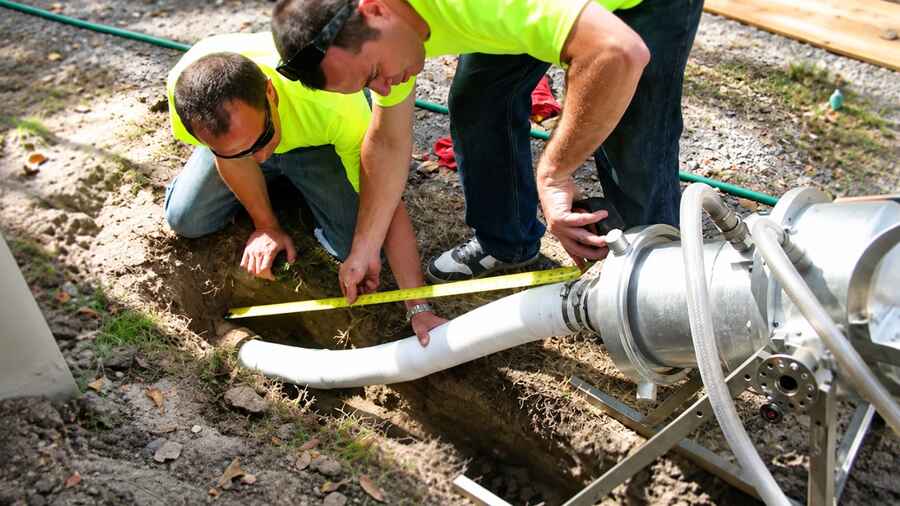
Method 1: Pipe Bursting (Full Replacement)
Used when the existing sewer line needs to be replaced entirely, because it has collapsed, is severely misaligned, or has deteriorated beyond repair.
How it works: A hydraulic bursting head is pulled through the existing pipe from a small access pit at one end. As it passes through, it fractures and displaces the old pipe outward into the surrounding soil while simultaneously pulling a brand-new HDPE pipe into place behind it. The old pipe is gone. A new pipe occupies the same space. No trench.
Best for: Collapsed or crushed pipe · significant joint offset · severe root damage · deteriorated clay or cast iron
Not appropriate when: Surrounding soil cannot support the displacement process · other utility lines are too close
Method 2: Cured-in-Place Pipe (CIPP) Lining
Used when the existing pipe is structurally sound but damaged (cracked, corroded, or showing root intrusion) and can serve as a host for a new pipe installed inside it.
How it works: A flexible tube saturated with epoxy resin is inserted into the existing pipe, inflated to press against the pipe walls, and then cured (hardened) in place using UV light or hot water/steam. The result is a new, seamless, smooth-walled pipe inside the old one, resistant to future root intrusion and corrosion.
Best for: Cracked or corroded pipe that retains its shape · root intrusion without full collapse · restoration of flow capacity
Not appropriate when: Fully collapsed pipe · severe misalignment · internal diameter too compromised for liner insertion
🔎 How Do You Know Which Method You Need?
A sewer camera inspection is the only reliable way. A plumber inserts a camera into your sewer line through an access point and views the interior condition in real time. Emerald Plumbing provides sewer camera inspections across DC, Maryland and Virginia. Call (240) 392-3535.
Warning Signs Your Sewer Line May Be Failing
Multiple slow drains throughout the house simultaneously, not just one fixture
Gurgling sounds from toilets or drains when water is running elsewhere in the house
Persistent sewage odour inside the home or in the yard near the sewer line path
Wet or unusually lush patches in the yard, especially in a line from house to street
Frequent drain backups despite regular professional clearing
Foundation cracks or settlement in an older home
Home built before 1980 with clay or cast iron sewer lines that have never been inspected
If sewage is already backing up into your home, treat it as an emergency plumbing situation, and read our guide on what counts as a plumbing emergency. If you live in Montgomery or Prince George's County, Maryland, WSSC Water's guide to sewer blockages and backups explains who is responsible for each part of the line and what to expect from the repair process.
What Does Trenchless Sewer Replacement Cost in the DMV?
Sewer Camera Inspection
Typical range: 150–400. The essential first step. No reliable quote is possible without it. Emerald applies the inspection fee toward the cost of any repair or replacement performed.
CIPP Lining (Cured-in-Place Pipe)
Typical range: 80–250 per linear foot. A standard 40–60 foot residential run typically costs 4,000–15,000 depending on pipe diameter, depth and access conditions.
Pipe Bursting (Full Replacement)
Typical range: 100–300 per linear foot. A standard residential replacement typically costs 6,000–18,000, typically 20–40% less than traditional open-trench replacement when restoration costs are factored in.
Traditional Open-Trench (for comparison)
All-in typical cost: 8,000–30,000+. Once excavation, pipe replacement, backfill, driveway repaving, lawn restoration and landscaping replacement are included, traditional replacement often costs significantly more than the trenchless equivalent.
What affects your specific cost: line length · pipe depth · pipe diameter · number of access points · soil and ground conditions · urgency · permit fees (required in DC, MD and VA, and a licensed plumber handles this)
Timeline
Camera inspection: 1–2 hours
CIPP lining: 1–2 days depending on curing method and line length
Pipe bursting: 1–2 days for most residential runs
Trenchless vs. Traditional Sewer Replacement: The Honest Comparison
Trenchless methods cause minimal yard disruption and typically complete in 1–2 days. Traditional open-trench replacement disrupts the full line length, often including driveways and hardscape, and takes 3–5+ days including restoration. Total all-in costs typically favour trenchless when restoration is factored in. Both methods produce pipes with a 50+ year expected lifespan.
Trenchless is the right choice for most standard residential situations in the DMV, but not for all. Fully collapsed pipe in multiple locations, severe misalignment, or access under an existing structure may require traditional replacement. The camera inspection determines which category you are in.
⚠️ Important
A contractor who recommends trenchless without inspecting first, or insists on traditional replacement without explaining why trenchless does not apply, is not serving your interests well. Camera inspection first, always.
Frequently Asked Questions
What is trenchless sewer replacement?
Trenchless sewer replacement repairs or replaces a damaged sewer line without digging a full-length trench. Access is made at two small points, each end of the affected section, and the repair is carried out from inside the pipe. The two methods are pipe bursting (full replacement) and CIPP lining (internal repair and sealing).
How long does trenchless sewer replacement last?
Both CIPP lining and pipe bursting produce pipes with an expected lifespan of 50+ years when properly installed. HDPE pipe and epoxy liners are highly resistant to corrosion and root intrusion, the two primary causes of sewer line failure in the DMV.
Does trenchless sewer replacement require permits in DC, MD or VA?
Yes. Sewer line work, trenchless or traditional, requires permits in Washington DC, Maryland and Virginia. Unpermitted work creates liability issues at sale. Emerald Plumbing pulls all required permits on every sewer line project across all three DMV jurisdictions.
Is trenchless more expensive than traditional sewer replacement?
The pipe work per foot may cost slightly more. However, the all-in cost, including landscape restoration, driveway repaving, deck removal and lawn repair, typically makes trenchless the less expensive option overall for most DMV homeowners. Traditional replacement costs often significantly exceed the pipe work alone.
Can roots grow back after CIPP lining?
CIPP epoxy liners create a seamless interior with no joints for roots to penetrate. Pipe bursting replaces the old pipe with HDPE, which is similarly root-resistant. Neither method provides the entry points that allowed root intrusion into the original pipe.
How do I know if my sewer line needs replacement or just cleaning?
A sewer camera inspection is the only reliable answer. Repeated backups after professional cleaning, gurgling sounds, sewage odour and wet patches in your yard all suggest a structural problem that cleaning alone cannot resolve. The camera shows exactly what is there before any work is authorised.
📞 Ready to Get Help? Call Emerald Plumbing
Call (240) 392-3535. Emerald Plumbing provides sewer camera inspections and trenchless sewer replacement across Washington DC, Maryland and Northern Virginia. Free estimates,