Why Is My Water Pressure So Low? The 7 Most Common Causes in Maryland and Virginia Homes
You turn on the shower and stand back, waiting for the pressure to build. It never does. A thin, unconvincing stream trickles out at a rate that makes rinsing shampoo feel like a small defeat.
Or you run the dishwasher and the kitchen tap slows to almost nothing. Or the upstairs bathroom has always been weaker than the downstairs one and you have just learned to live with it.
Low water pressure is one of the most common complaints Emerald Plumbing receives from homeowners across Maryland, Virginia and Washington DC, and also one of the most misdiagnosed, because the symptom is always the same (weak flow) but the causes are genuinely different. Treating the wrong cause costs money and solves nothing.
This guide covers the 7 most common causes of low water pressure in DMV homes, in order of how often we find them, and exactly how to figure out which one applies before you call anyone. For a professional diagnosis, call (240) 392-3535.
Cause 1: A Partially Closed Shut-Off Valve
How common: Very, and very often overlooked.
Every home has at least two main shut-off valves. A valve that is 80% open instead of 100% open can reduce flow pressure noticeably throughout the entire house.
How to check: Locate your main shut-off valve in the basement near where the water line enters. Gate valve (round wheel handle): turn counterclockwise until it stops. Ball valve (lever handle): make it fully parallel to the pipe. Takes two minutes and costs nothing. Check this first.
Cause 2: A Failing or Incorrectly Set Pressure Reducing Valve (PRV)
How common: Extremely common in Maryland and Virginia homes built after the 1980s.
A PRV (bell-shaped device where the main water line enters your home) reduces city supply pressure (80 to 150 PSI) to a safe residential level (40 to 60 PSI). When it fails or is set too low, it restricts water pressure throughout the entire house: every fixture, every tap, every shower.
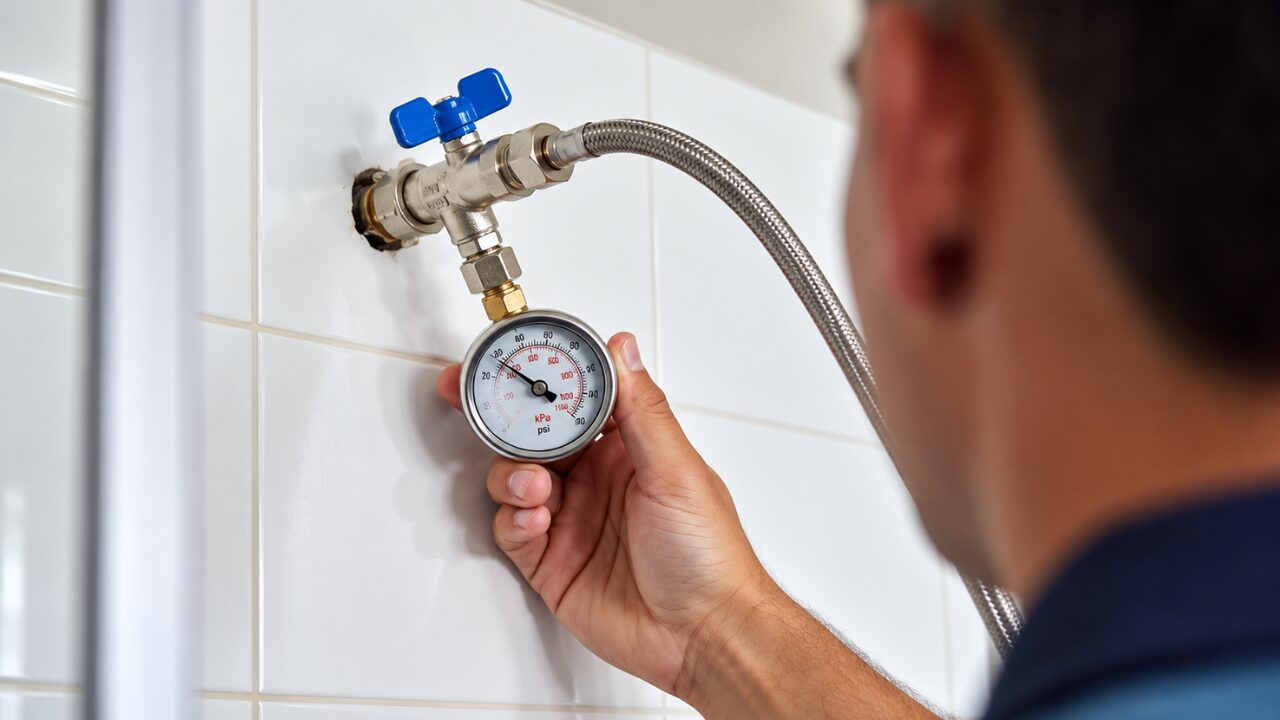
Signs it is the PRV: low pressure affects every fixture equally · whistling or chattering from the valve when water runs · home is 10 to 15+ years old and PRV has never been inspected · pressure was normal then dropped suddenly
Fix cost: PRV replacement typically costs $200 to $400 in the DMV including labour, and restores full pressure immediately.
Cause 3: Corroded or Scaled Pipes Restricting Flow
How common: Very common in homes built before 1970.
Galvanised steel pipes corrode from the inside over decades, progressively narrowing the interior diameter. In areas with hard water (much of Maryland, parts of Northern Virginia), calcium and magnesium scale deposits on the inside of pipes regardless of age.
Signs: pressure has dropped gradually over years · faint rust or metallic taste · water runs slightly discoloured after periods of non-use · galvanised steel pipes present (pre-1960 homes)
Fix: Ranges from water softener installation (for scale in newer pipes) to partial or full pipe repair and repiping for severely corroded galvanised lines.
Cause 4: Clogged Aerators or Showerheads
How common: Extremely common, and the easiest fix on this list.
If low pressure is limited to one fixture only, the most likely cause is a clogged aerator (for taps) or a mineral-blocked showerhead. Particularly common in hard water areas.
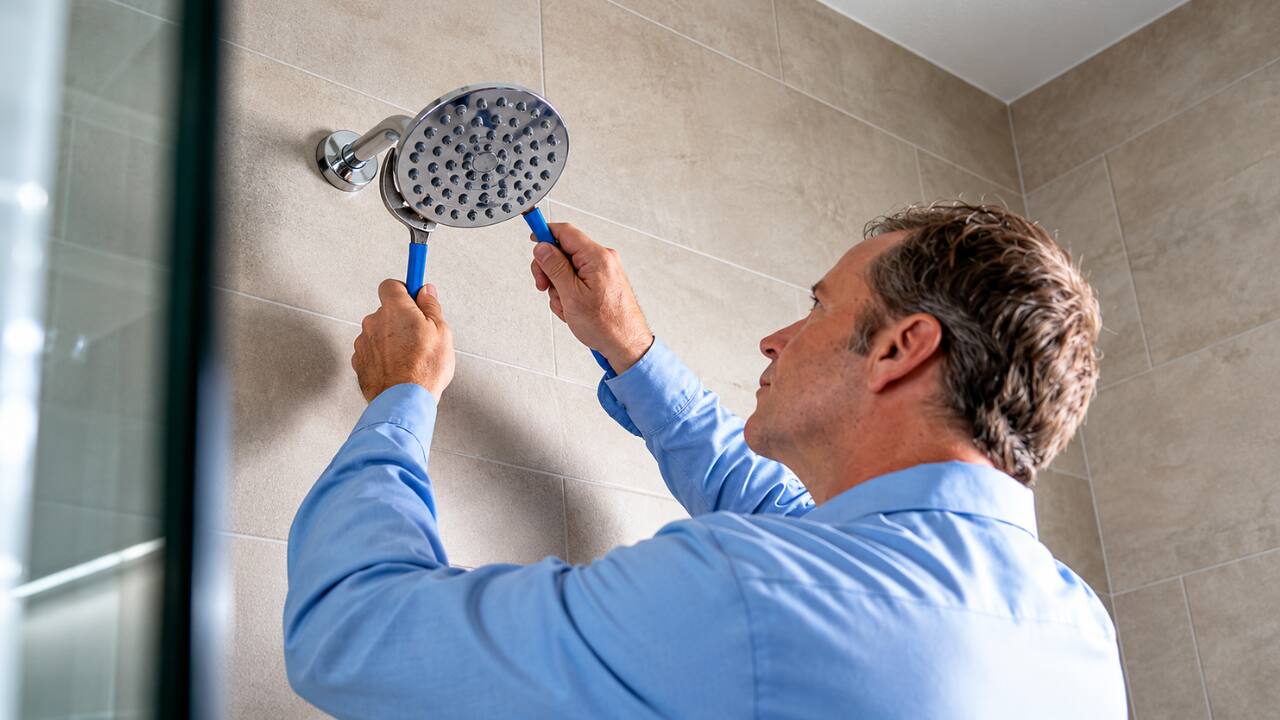
DIY fix: Unscrew the aerator from the tap tip, remove the screen, soak in white vinegar for 30 minutes, rinse and reattach. For showerheads, remove and soak in vinegar or replace (basic replacement: $20 to $40). If cleaning restores full pressure, it is fixed. If pressure stays low after the aerator is clean, the problem is upstream in the supply line.
Cause 5: A Hidden Leak Somewhere in the System
How common: More common than most homeowners realise, and more serious.
If water is escaping the pressurised system through a leak before it reaches your fixtures (in walls, under the slab, in the yard), pressure drops at every tap downstream. Slab leaks are particularly prevalent in Virginia and Maryland homes built on concrete slabs with copper pipes embedded below (common from the 1960s to 1990s).
Signs: water bill increased with no change in usage · pressure drop is recent and sudden · can hear running water when nothing is on · hot spots on the floor · damp or discoloured areas on walls or ceilings
How to check: Turn off every water-using fixture and appliance. Go to your water meter. If the dial is moving with everything off, you have a leak. The EPA's WaterSense Fix a Leak guide recommends the same check, comparing the meter over a two-hour period with no water in use. Call a plumber for hidden and slab leak detection immediately.
Cause 6: Problems With the Water Supplier's Main
How common: Periodic, particularly after construction or main line breaks.
Sometimes the problem is in the street, not in your house. Utility main line issues, valve adjustments, main breaks and high-demand periods (hot summer days with widespread irrigation) can all temporarily reduce delivery pressure.
How to check: Ask neighbours whether they have the same issue. Check your utility's outage map (DC Water, WSSC, Virginia American Water all have them). If the whole street is affected and pressure returns, the cause was supplier-side. If neighbours have normal pressure and yours is consistently low, the problem is on your property.
Cause 7: A Shared Service Line in Older Neighbourhoods
How common: Specific to older DMV neighbourhoods, but significant when it applies.
In some older Washington DC, Silver Spring, Takoma Park, Alexandria and Arlington neighbourhoods, two or more properties were originally connected to a single service line from the street. When your neighbour runs their dishwasher or fills a bathtub, you feel it as a pressure drop.
Signs: pressure drops consistently at the same times of day · pressure is normal when neighbours are not using water · home is in an older neighbourhood (pre-1950 construction) · shared service line mentioned in home inspection or permit history
Fix: Installation of a dedicated service line from the street to your property. This is significant work requiring trenching, main connection and permitting, but it permanently resolves the issue.
How to Diagnose Which Cause Is Yours
Step 1: Is it one fixture or multiple? One fixture only → start with the aerator (Cause 4). Multiple fixtures → continue below.
Step 2: Is the main shut-off fully open? Gate valve = counterclockwise to stop. Ball valve = lever parallel to pipe. Fix if not.
Step 3: Check your neighbours. Same issue? → Cause 6 (supplier-side). Is their pressure fine? → problem is on your property.
Step 4: Check your water meter with everything off. Dial moving? → hidden leak (Cause 5). Call a plumber for leak detection.
Step 5: Pre-1970 home with galvanised pipes? Cause 3 likely contributing. Post-1980 home with PRV? → have the PRV tested (Cause 2).
Step 6: Pressure drops at certain times of day? Consistent daily pattern correlating with neighbour activity → Cause 7 (shared line).
Call Emerald Plumbing at (240) 392-3535 if: the aerator/showerhead clean does not restore pressure to a single fixture · multiple fixtures have low pressure and the main valve is fully open · your meter shows movement with everything off · pressure dropped suddenly (if water is actively escaping, read what counts as a plumbing emergency) · basic checks have not resolved the problem.
Frequently Asked Questions
Why is my water pressure low in only one room?
Low pressure in a single room or fixture usually indicates a localised issue. Start by cleaning the aerator on the affected tap, since mineral-clogged aerators are the most common cause of single-fixture pressure loss. If cleaning does not restore pressure, check whether the supply valve under that fixture is fully open. If pressure remains low, the issue is in the branch supply line to that area.
Why does my water pressure drop when I flush the toilet or run the dishwasher?
A small pressure drop when multiple fixtures run simultaneously is normal. However, if the drop is dramatic or slow to recover, it may indicate an undersized service line, a failing pressure reducing valve, or in older DMV neighbourhoods, a shared service line with another property.
What is normal water pressure for a home in Maryland or Virginia?
Normal residential water pressure in the DC Metro area is typically 40 to 60 PSI. Pressure below 40 PSI is generally considered low. Pressure above 80 PSI is too high and can damage plumbing over time. A pressure gauge attached to an outdoor hose bib (available at hardware stores for $10 to $20) gives you a reading in seconds.
Can I fix low water pressure myself?
Some causes are DIY-accessible: cleaning aerators and showerheads, checking that shut-off valves are fully open, and identifying whether the problem is supplier-side by asking neighbours and checking the utility outage map. PRV failure, pipe corrosion, hidden leaks, shared service lines and supply line issues require a licensed plumber.
How much does it cost to fix low water pressure in a DMV home?
Cost depends entirely on the cause. Aerator replacement: $5 to $20. PRV replacement: $200 to $400 including labour. Leak detection and repair: $150 to $600+ depending on location and complexity. Pipe repiping: $2,000 to $15,000+ depending on scope. A professional diagnosis identifies the cause and cost before any work begins.
Does Emerald Plumbing diagnose and fix low water pressure in Maryland and Virginia?
Yes. Emerald Plumbing diagnoses and repairs water pressure problems throughout Washington DC, Maryland and Northern Virginia. We identify the cause (shut-off valve, PRV, pipe corrosion, leak or service line) and explain the repair and cost before we begin. Call (240) 392-3535 for a free estimate.
Ready to Get Help? Call Emerald Plumbing
📞 Call (240) 392-3535: Emerald Plumbing carries pressure gauges, leak detection equipment and inspection cameras on every truck. We tell you the cause and the fix in a single visit. Available 24/7 across DC, Maryland and Virginia, including emergency plumbing.
🌐 Schedule at emerald911.com: free estimates, no guessing, clear diagnosis before any work begins.